


Albanian cuisine reflects the country’s rich history and geographical diversity. Located at the crossroads of Mediterranean and Balkan cultures, it has been shaped by Ottoman, Italian, Greek, and Slavic influences while preserving unique local traditions.
From crispy byrek to tender tavë kosi, and the sweet trileçe, discover an authentic cuisine rooted in rich and flavorful traditions, supported by local ingredients and ancestral recipes.
Origins and Influences
Albania, located at the crossroads between Central Europe, the southern Balkans, and the Mediterranean Sea, has a complex history marked by numerous cultural and historical influences. This is also reflected in the country’s gastronomy.
Ottoman Influence
Ottoman rule, which lasted more than 400 years, left a major mark on Albanian cuisine. Dishes such as dolma (stuffed grape leaves) and baklava (a dessert made of layers of filo pastry, chopped nuts, and soaked in sugar syrup or honey) come from this influence.
Mediterranean Influence
With its coastline along the Ionian and Adriatic Seas, Albania incorporates Mediterranean ingredients such as olive oil, fresh herbs (mint, parsley, rosemary), fish, and seafood.
Rural Gastronomy
Albania remains an agricultural country where cuisine is closely tied to local production. Dairy products, vegetables, grains, and meat play a central role.
Regional Specialties
Albania is distinguished by its diverse landscapes — coastline, plains, and mountains — which directly influence its agriculture and cuisine.
Mountainous North
The dishes are richer and heartier, suited to a harsher climate. Thick soups and dishes based on corn and wheat are common.
Fertile and Coastal South
The cuisine is lighter, highlighting vegetables, olive oil, and fresh fish.
Berat and Korçë
These regions are renowned for their dairy products, which hold an important place in local gastronomy.
5 Local Specialties to Try During Your Trip to Albania
Byrek (Tirana and Central Region)
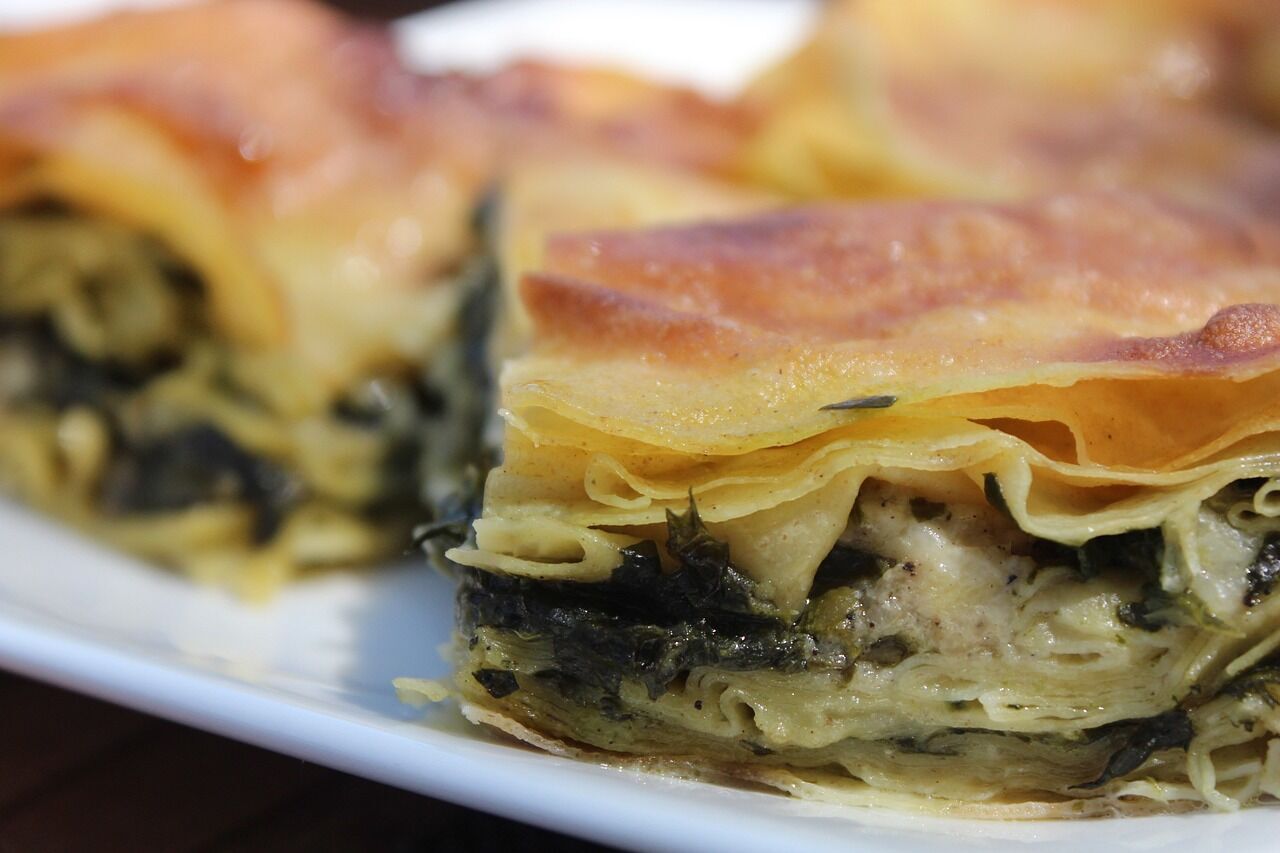
It’s impossible to talk about Albania without mentioning this iconic savory pastry. Filled with spinach, cheese, or meat, byrek is eaten throughout the country, but the version from the Tirana region stands out for its thin and crispy dough. It can be enjoyed both in restaurants and bakeries, generally for less than €2.
Speca të Mbushura (Berat and Southern Region)
These stuffed peppers are filled with a mixture of rice, minced meat (often lamb or beef), herbs, and tomatoes, then baked in the oven. They are often served with bread or yogurt for a comforting and flavorful meal.
Tavë Kosi (Korçë Region)
Considered Albania’s national dish, tavë kosi is a baked lamb casserole prepared with yogurt and eggs, cooked until golden on top. Rich and comforting, it is often referred to as the country’s “national dish.”
Qifqi (Gjirokastër Region)
Albanians love meat, but vegetarians can also enjoy these rice balls made with eggs, parsley, dried mint, and sometimes a little cheese. Shaped into small balls and fried until golden and crispy, qifqi are simple yet delicious and can be served as a main dish or side, often with salad or yogurt.
Trileçe
Finally, it’s impossible not to mention this wonderful sweet discovery: Trileçe, the delicious dessert inspired by the Latin American “Tres Leches.” Introduced to Albania through Turkish and Balkan influences, it quickly became a staple in bakeries and homes alike.
This light and fluffy cake is soaked in a mixture of three kinds of milk and often topped with a thin layer of caramel.
In the local version, it may be prepared with cow’s milk, goat’s milk, and cream for an even more authentic touch.
Key Characteristics
To better understand Albanian cuisine, here are three essential aspects:
Seasonal Cuisine
Albanians favor fresh, local products with a strong emphasis on seasonal fruits and vegetables.
Simplicity
Recipes are often simple and designed to highlight the natural flavors of the ingredients.
Homemade Dishes
Culinary traditions are passed down from generation to generation, and homemade meals are at the heart of Albanian food culture.
Bonus: Rakia
You’ve just discovered five specialties, but I’d also like to introduce you to one essential drink during your trip: rakia. It is a traditional alcoholic beverage very popular throughout the Balkans, including Albania, where it holds a special place in local culture and traditions.
Rakia is a fruit brandy distilled from fermented fruit. It is generally made from grapes, although other fruits such as plums, figs, or blackberries can also be used. In Albania, rakia is often homemade using family recipes passed down through generations. Grape rakia is the most common, but plum and cherry versions are also appreciated.
Rakia is consumed during many social occasions such as weddings, family celebrations, and religious festivals. It is also frequently offered as a sign of hospitality to guests.
Rakia can be surprisingly strong: homemade versions can easily exceed 50% alcohol. Enjoy it in moderation, of course!
In Albania, one thing is certain: rakia is considered the solution to all your problems! If you tell an Albanian you have a headache: rakia. A sore throat: rakia. A broken leg: rakia. I’m joking about the last one, of course — but only slightly!
Fun Fact
One day at the beach, I stepped on a sea urchin and couldn’t remove the spines. The local bar didn’t have a first-aid kit but offered me… rakia as a magical remedy! While supposedly effective in theory, it unfortunately didn’t prevent the infection. Thankfully, a doctor in Tirana saved the day by prescribing antibiotics instead of brandy.
In short, Albanian rakia is much more than a strong drink: this fruit brandy embodies Albanian friendliness and hospitality. It is a true symbol of the culture, deeply rooted in traditions and ancestral know-how. If you get the chance, try it in moderation to discover its authenticity!
A Culinary Heritage in Evolution
Today, Albanian cuisine preserves its authenticity while integrating modern influences, supported by a dynamic diaspora and the growth of tourism. Many restaurants are reinventing traditional recipes, helping to showcase a culinary heritage that is still too little known internationally.
Culinary Experiences Organized by Expérience Albanie
To further explore the secrets of Albanian cuisine, we offer gourmet experiences during your stay: cooking classes, tastings, solo or group activities, in Tirana, Berat, or Saranda… Anything is possible depending on your wishes.
You can also share a unique moment with our family near Shkodër. We welcome you into our home for an authentic experience centered around traditional cuisine and music, while learning more about Albanian customs and ways of life.
Feel free to contact us for more information.
